TAR and Physical AI Smart Spaces accepted to NeurIPS 2026
Published:
Our TAR and PAISS benchmark papers were accepted to NeurIPS 2026, supporting evaluation of traffic anomaly reasoning and multi-camera 3D perception.
Published:
Our TAR and PAISS benchmark papers were accepted to NeurIPS 2026, supporting evaluation of traffic anomaly reasoning and multi-camera 3D perception.
Published:
The ECCV 2026 workshop marked ten editions of AI City Challenge, connecting six benchmark tracks with research in visual understanding, reasoning, and forecasting.
Published:
I supported VANTAGE-Bench evaluation infrastructure and TAR launch alignment for physical AI video understanding, highlighted with NVIDIA Cosmos3 at COMPUTEX 2026.
Published:
The 10th AI City Challenge was accepted as an ECCV 2026 workshop, with six tracks spanning perception, reasoning, retrieval, forecasting, and geographic generalization.
Published:
I contributed video embedding search models, evaluation data, and deployment integration to NVIDIA’s GTC 2026 Video Search and Summarization demonstration.
Published:
My UrbanAI keynote covered AI City Challenge progress, streaming multi-camera tracking workflows, and 3D perception models for smart spaces and transportation.
Published:
Our factory digital-twin demo appeared at GTC DC 2025, alongside AI City Challenge and BMTT workshops on multi-camera perception and tracking.
Published:
Physical AI Smart Spaces provides synchronized multi-camera data and evaluation resources for 3D perception, supporting the 2024 and 2025 AI City Challenge.
Published:
Our Metropolis perception work was demonstrated at CES 2025 as part of NVIDIA’s Mega Omniverse Blueprint for industrial robot fleet digital twins.
Published:
Our NTECH 2024 awards recognized collaborative work on bird’s-eye-view perception and real-time multi-camera tracking and localization.
Published:
The NVIDIA multi-camera tracking workflow connects synthetic data generation, model training, and video analytics to help developers track people and activity across large spaces.
Published:
The AI City Challenge at CVPR 2024 brought together over 700 teams, with Omniverse-generated data supporting multi-camera person tracking across simulated indoor environments.
Published:
COMPUTEX 2024 highlighted how electronics manufacturers were applying NVIDIA Metropolis, NIM, and Omniverse to factory monitoring, digital twins, and visual AI workflows.
Published:
A GTC 2024 demonstration combined NVIDIA Metropolis multi-camera tracking, Omniverse digital twins, and robot-routing tools to model and coordinate warehouse activity.
Published:
I developed the multi-camera tracking application in NVIDIA Metropolis Microservices 1.0, combining appearance embeddings and spatiotemporal constraints to associate people across camera views.
Published:
I developed people re-identification and pose-based action recognition networks, along with Triton inference samples, for model training and deployment in NVIDIA TAO Toolkit 4.0.
Published:
My work on Amazon One included biometric identity verification and adaptive identity updates, with two U.S. patent applications supporting the palm recognition service.
Published:
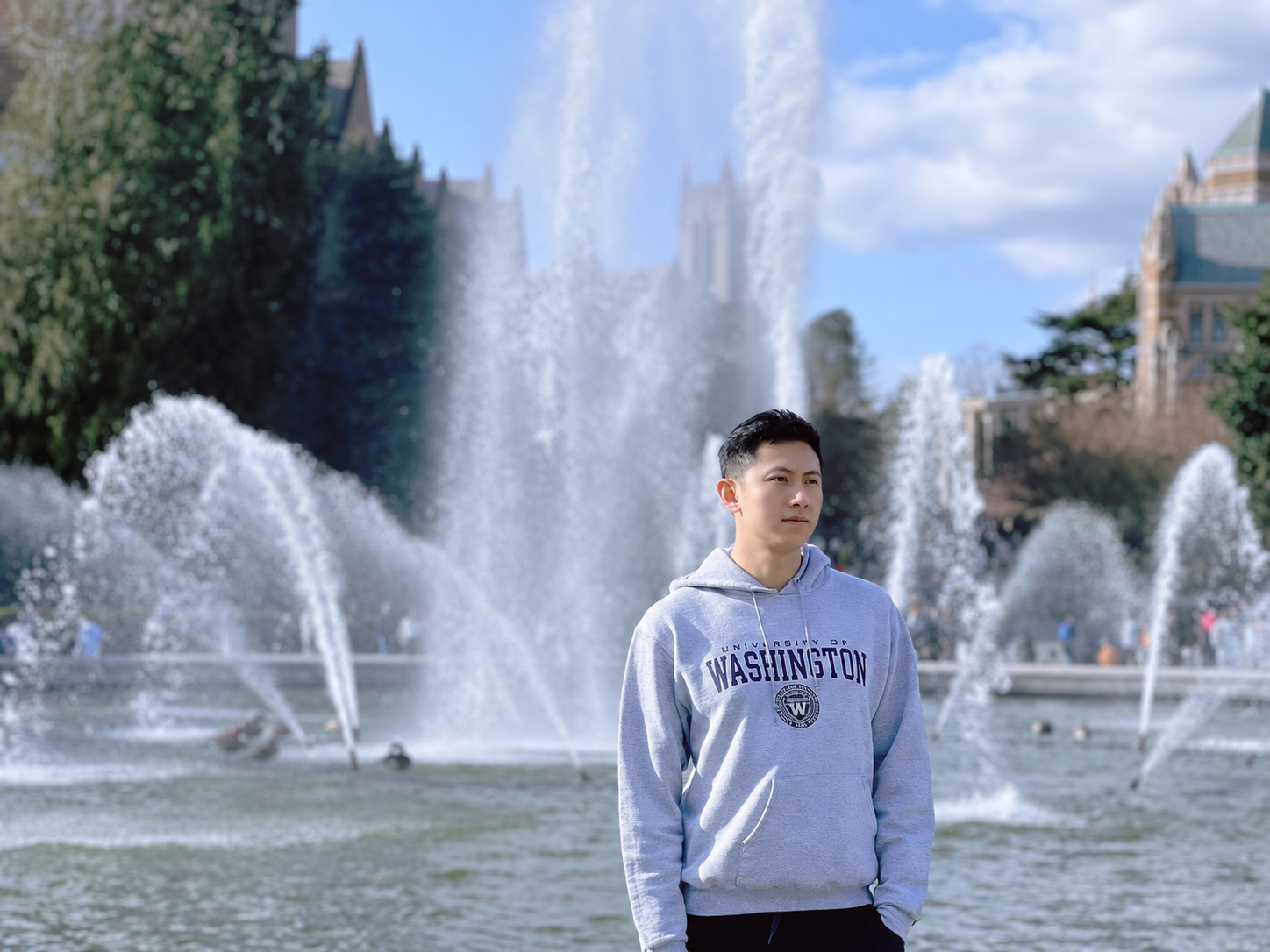
I defended my Ph.D. at the University of Washington, presenting research on robust video object tracking and camera self-calibration for 3D scene understanding.
Published:
Our team built a scripture-art application during the 24-hour Code for the Kingdom Seattle hackathon and received the People’s Choice Award.